Atherosclerosis ဆိုတာ ဘာလဲ? (What is Atherosclerosis?)
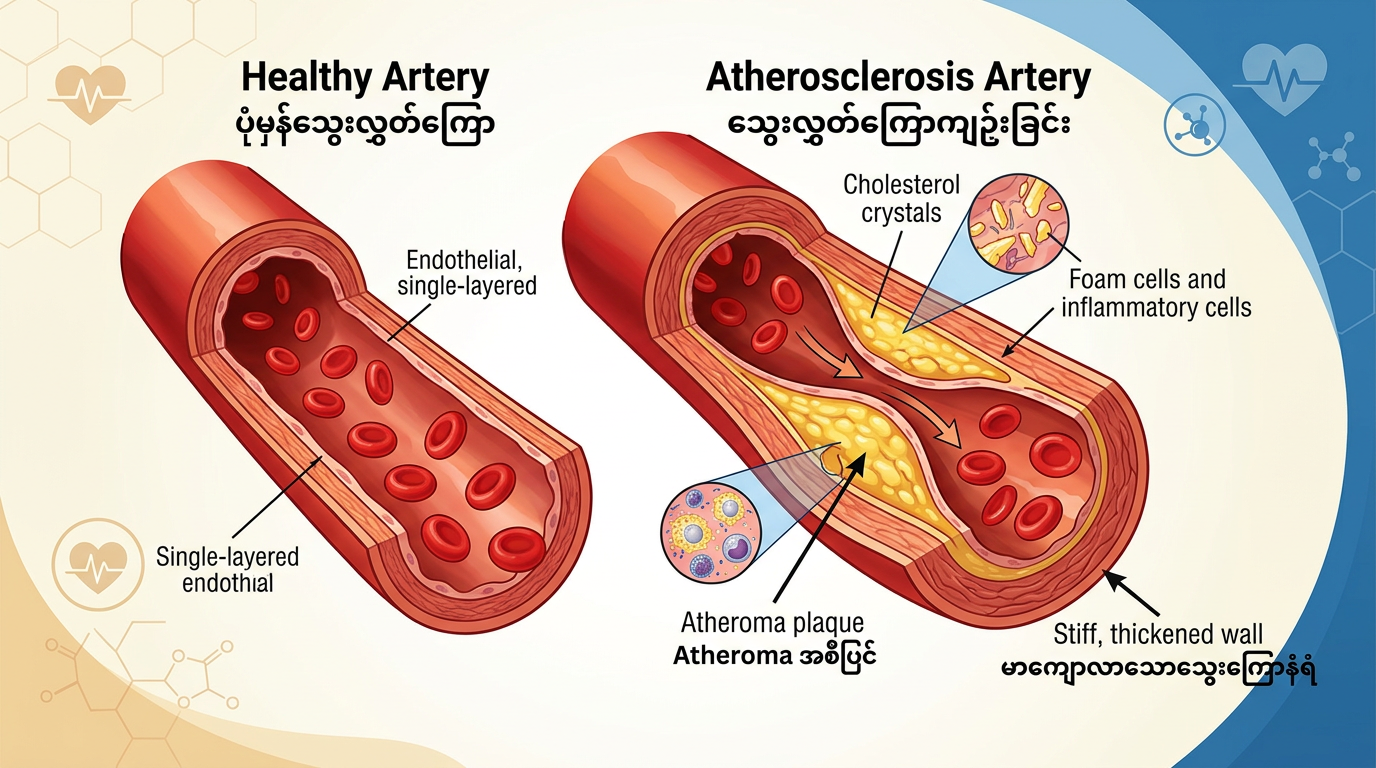
Atherosclerosis ဆိုသည်မှာ သွေးလွှတ်ကြော (artery) နံရံများအတွင်း အဆီနှင့် ကိုလက်စထရောများ စုပုံလာပြီး အနည်ထိုင်ကာ သွေးကြောနံရံများ မာကျော၊ ထူထဲပြီး ကျဉ်းမြောင်းသွားသော နာတာရှည် သွေးကြောရောဂါဖြစ်စဉ်ကို ခေါ်ဆိုပါသည်။ Atherosclerosis is a chronic cardiovascular disease characterized by the narrowing, hardening, and loss of elasticity of arteries due to the buildup of fatty plaques.
Grade 12 Biology ဘာသာရပ်တွင် Circulatory System (သွေးလှည့်အဖွဲ့အစည်း) နှင့် Cardiovascular Diseases (နှလုံးနှင့် သွေးကြောဆိုင်ရာ ရောဂါများ) ကို လေ့လာရာ၌ Atheroma နှင့် Atherosclerosis ခေါင်းစဉ်သည် စာမေးပွဲအတွက် အလွန်အရေးပါသော သင်ခန်းစာတစ်ခု ဖြစ်သည်။
Atheroma နှင့် Atherosclerosis ၏ အဓိက ကွာခြားချက်
ကျောင်းသားအများစု မှားယွင်းလေ့ရှိသော အချက်မှာ Atheroma နှင့် Atherosclerosis ကို အတူတူဟု ထင်မှတ်ကြခြင်း ဖြစ်သည်။ အမှန်စင်စစ်တွင် အောက်ပါအတိုင်း ရှင်းလင်းစွာ ခွဲခြားမှတ်သားနိုင်ပါသည် -
- Atheroma (အဆီဖု / Fatty Plaque): သွေးလွှတ်ကြော၏ အတွင်းလွှာ (tunica intima) တွင် lipids, cholesterol, cellular debris နှင့် calcium များ စုပုံဖြစ်ပေါ်လာသော အဆီဖတ် (fatty deposit) ကို ခေါ်သည်။
- Atherosclerosis (သွေးကြောမာကျောကျဉ်းမြောင်းခြင်း ဖြစ်စဉ်): Atheroma plaque များ ပိုမိုကြီးထွားလာပြီး ကယ်လ်စီယမ်ဓာတ်များ ပေါင်းစပ်ကာ သွေးလွှတ်ကြောနံရံများ ပျော့ပျောင်းမှု ဆုံးရှုံးပြီး မာကျောကျဉ်းမြောင်းသွားသည့် ရောဂါဖြစ်စဉ်တစ်ခုလုံး ကို ခေါ်သည်။
Atherosclerosis ဖြစ်ပေါ်လာပုံ အဆင့်ဆင့် (Pathogenesis / Steps of Development)
Atherosclerosis ဖြစ်စဉ်သည် နေ့ချင်းညချင်း ဖြစ်ပေါ်လာခြင်း မဟုတ်ဘဲ နှစ်ကာလကြာရှည်စွာ အောက်ပါ အဆင့် ၅ ဆင့်အတိုင်း တဖြည်းဖြည်း ဖြစ်ထွန်းလာခြင်း ဖြစ်သည် -
၁။ သွေးကြောအတွင်းလွှာ ထိခိုက်ဒဏ်ရာရခြင်း (Endothelial Damage)
သွေးလွှတ်ကြော၏ အတွင်းဆုံး အလွှာဖြစ်သော Endothelium (အတွင်းလွှာဆဲလ်များ) သည် သွေးတိုးခြင်း (High Blood Pressure)၊ ဆေးလိပ်သောက်ခြင်း (Smoking/Toxins) သို့မဟုတ် သွေးတွင်းသကြားဓာတ်မြင့်မားခြင်းတို့ကြောင့် ပျက်စီးထိခိုက်မှု ဖြစ်ပေါ်လာသည်။
၂။ ကိုလက်စထရောနှင့် အဆီဓာတ်များ စုပုံခြင်း (Lipid Accumulation & Oxidation)
Endothelium ပျက်စီးသွားသော နေရာတွင် သွေးတွင်းရှိ မကောင်းသော ကိုလက်စထရော (LDL — Low-Density Lipoprotein) များသည် သွေးကြောနံရံအတွင်းသို့ စိမ့်ဝင်ပြီး ဓာတ်တိုးခြင်း (oxidation) ဖြစ်ပေါ်သည်။
၃။ ရောင်ရမ်းမှုဖြစ်စဉ်နှင့် Foam Cells များ ဖြစ်ပေါ်ခြင်း (Inflammatory Response & Foam Cells)
ခန္ဓာကိုယ်၏ ခုခံအားစနစ်မှ သွေးဖြူဥတစ်မျိုးဖြစ်သော Monocytes များ ရောက်ရှိလာပြီး Macrophages အဖြစ်သို့ ပြောင်းလဲကာ အဆီများကို ဝါးမျိုစုပ်ယူကြသည်။ အဆီများဖြင့် ပြည့်နှက်နေသော Macrophages များကို Foam Cells (အမြှုပ်ဆဲလ်များ) ဟု ခေါ်ဆိုသည်။ ဤဆဲလ်များ စုပုံလာရာမှ အဝါရောင်အဆီစင်းများ (Fatty Streaks) စတင်ဖြစ်ပေါ်လာသည်။
၄။ အမျှင်လွှာဖုံးအုပ်ခြင်းနှင့် အဆီဖုဖြစ်ပေါ်ခြင်း (Plaque Formation & Fibrous Cap)
သွေးကြောနံရံရှိ ကြွက်သားဆဲလ်များ (Smooth Muscle Cells) ပွားများလာပြီး အဆီအစုအဝေးအပေါ်တွင် ကော်လာဂျင်အမျှင်များဖြင့် Fibrous Cap (အမျှင်မာအလွှာ) ဖုံးအုပ်ကာ မာကျောသော Atheroma (Plaque) ဖြစ်လာသည်။
၅။ ကယ်လ်စီယမ်စုပုံပြီး သွေးကြောမာလာခြင်း (Calcification & Atherosclerosis)
အချိန်ကြာလာသည်နှင့်အမျှ Plaque အတွင်းသို့ ကယ်လ်စီယမ်ဓာတ် (Calcium ions) များ စုပုံလာသဖြင့် သွေးကြောနံရံသည် မူလ ပျော့ပျောင်းကြံ့ခိုင်မှု (elasticity) ဆုံးရှုံးသွားပြီး တောင့်တင်းမာကျောလာသည်။ သွေးစီးဆင်းရာ လမ်းကြောင်း (Lumen) မှာလည်း သိသိသာသာ ကျဉ်းမြောင်းသွားသည်။
Atherosclerosis ကြောင့် ဖြစ်ပေါ်လာနိုင်သော နောက်ဆက်တွဲ ရောဂါဆိုးကျိုးများ (Complications)
သွေးလွှတ်ကြောများ ကျဉ်းမြောင်းပြီး မာလာသောအခါ ခန္ဓာကိုယ်အင်္ဂါအစိတ်အပိုင်းများသို့ အောက်ဆီဂျင်နှင့် အာဟာရဓာတ် ပို့ဆောင်မှု လျော့နည်းသွားပြီး အောက်ပါ အန္တရာယ်ကြီးမားသော ကျန်းမာရေးပြဿနာများကို ဖြစ်စေနိုင်သည် -
| ထိခိုက်သော သွေးကြော | ဖြစ်ပေါ်သည့် ရောဂါ | အကျိုးသက်ရောက်မှု / လက္ခဏာများ |
|---|---|---|
| Coronary Arteries (နှလုံးသို့ သွေးပို့သောကြော) |
Coronary Heart Disease (CHD) • Angina Pectoris (ရင်ဘတ်အောင့်ခြင်း) • Myocardial Infarction (Heart Attack) |
နှလုံးကြွက်သားများသို့ အောက်ဆီဂျင်လုံလောက်စွာ မရရှိတော့ဘဲ နှလုံးရပ်တန့်ခြင်း ဖြစ်စေနိုင်သည်။ |
| Carotid & Cerebral Arteries (ဦးနှောက်သို့ သွေးပို့သောကြော) |
Stroke (လေဖြတ်ခြင်း) / TIA | ဦးနှောက်ဆဲလ်များ သေဆုံးကာ ခန္ဓာကိုယ်တစ်ခြမ်း သေခြင်း၊ စကားမပြောနိုင်ခြင်း ဖြစ်စေနိုင်သည်။ |
| Renal Arteries (ကျောက်ကပ်သွေးကြော) |
Kidney Disease & Hypertension | ကျောက်ကပ်လုပ်ဆောင်ချက် ပျက်စီးခြင်းနှင့် သွေးတိုးရောဂါ ပိုမိုဆိုးရွားလာခြင်း။ |
| Peripheral Arteries (ခြေလက်သွေးကြောများ) |
Peripheral Artery Disease (PAD) | လမ်းလျှောက်လျှင် ခြေသလုံး ကြွက်တက်အောင့်ခြင်း (cramping pain) နှင့် တစ်ရှူးများ ပုပ်သွားခြင်း (gangrene)။ |
Thrombosis သတိပြုရန် - အကယ်၍ Atheroma plaque ၏ အပေါ်ယံ အလွှာ (fibrous cap) ပေါက်ပြဲသွားပါက သွေးဥမွှားများ စုဝေးလာပြီး Thrombus (သွေးခဲ) ချက်ချင်း ဖြစ်ပေါ်ကာ သွေးကြောကို လုံးဝ ပိတ်ဆို့သွားစေနိုင်ပါသည်။ ဤသည်မှာ ရုတ်တရက် နှလုံးသွေးကြောပိတ်ခြင်း (Acute Myocardial Infarction) ၏ အဓိက အကြောင်းရင်းဖြစ်သည်။
ဖြစ်ပွားစေနိုင်သော အန္တရာယ်အချက်များ (Risk Factors)
Atherosclerosis ဖြစ်ပွားမှုကို အားပေးသော အချက်များကို အုပ်စု ၂ ခု ခွဲခြားလေ့လာနိုင်သည် -
၁။ ပြုပြင်ပြောင်းလဲ၍ မရနိုင်သော အချက်များ (Non-modifiable Risk Factors)
- အသက်အရွယ် (Age): အသက်ကြီးလာသည်နှင့်အမျှ သွေးကြောများ သဘာဝအတိုင်း ပျော့ပျောင်းမှု လျော့နည်းလာသည်။
- မျိုးရိုးဗီဇ (Genetics / Family History): မိသားစုတွင် နှလုံးနှင့် သွေးကြောရောဂါ ရာဇဝင်ရှိသူများ၌ ပိုမိုဖြစ်ပွားလွယ်သည်။
- ကျား/မ ကွာခြားချက် (Gender): အမျိုးသားများတွင် သွေးဆုံးချိန်မတိုင်မီ အမျိုးသမီးများထက် ပိုမိုစောစီးစွာ ဖြစ်ပွားလေ့ရှိသည်။
၂။ လူနေမှုဘဝဖြင့် ကာကွယ်ပြုပြင်နိုင်သော အချက်များ (Modifiable Risk Factors)
- ဆေးလိပ်သောက်ခြင်း (Smoking): Nicotine နှင့် Carbon monoxide ဓာတ်များသည် သွေးကြောနံရံကို တိုက်ရိုက်ထိခိုက်စေပြီး သွေးဖိအားကို မြင့်တက်စေသည်။
- ပြည့်ဝဆီနှင့် အဆီများသော အစားအစာ (High Saturated Fat & Trans Fat Diet): သွေးတွင်း LDL ကိုလက်စထရော ပမာဏကို မြင့်တက်စေသည်။
- ကိုယ်လက်လှုပ်ရှားမှု နည်းပါးခြင်း (Sedentary Lifestyle): အဝလွန်ခြင်းနှင့် နှလုံးရောဂါဖြစ်နိုင်ခြေကို မြင့်တက်စေသည်။
- သွေးတိုးရောဂါ (Hypertension) နှင့် ဆီးချိုရောဂါ (Diabetes Mellitus)။
- စိတ်ဖိစီးမှုများခြင်း (Chronic Stress)။
Grade 12 Biology စာမေးပွဲအတွက် အဓိက မှတ်သားရန် အချက်များ (Exam Summary)
| အသုံးအနှုန်း (Term) | အဓိပ္ပာယ်ဖွင့်ဆိုချက် (Scientific Definition) |
|---|---|
| Atheroma | An accumulation of fatty deposits (cholesterol and lipids) forming a plaque beneath the endothelium in the inner lining of an artery. |
| Atherosclerosis | The progressive disease process in which arteries harden and narrow due to the formation of atheromatous plaques and calcium deposition. |
| Arteriosclerosis | A broad general term for the hardening and loss of elasticity of arteries from any cause. |
| Thrombosis | The formation of a blood clot (thrombus) inside a blood vessel, obstructing the flow of blood. |
| Lumen | The central blood-containing internal space or cavity of a blood vessel. |
Exam Quick Tip: အကယ်၍ စာမေးပွဲတွင် "Describe how atheroma leads to atherosclerosis" ဟု မေးမြန်းပါက (၁) Endothelial damage၊ (၂) LDL accumulation & Foam cells formation၊ (၃) Fibrous cap development၊ (၄) Calcium deposition leading to hardening & narrowed lumen ဟူသော အဆင့် ၄ ဆင့်ကို အစဉ်အတိုင်း စနစ်တကျ ရေးသားဖြေဆိုရန် လိုအပ်ပါသည်။