Ammonium Chloride (NH₄Cl) မှာ Metallic Bonding ဘာကြောင့် မရှိတာလဲ?
Question 10207 မှာ ammonium chloride \(\ce{NH4Cl}\) ထဲမှာ မပါဝင်တဲ့ bonding ကို ရွေးခိုင်းထားပါတယ်။ အဖြေမှန်က Metallic bonding ဖြစ်ပါတယ်။ ဒီအဖြေကို နားလည်ဖို့ \(\ce{NH4Cl}\) ရဲ့ bonding သုံးမျိုးကို ခွဲပြီးကြည့်ကြရအောင်။
1. Ionic Bonding
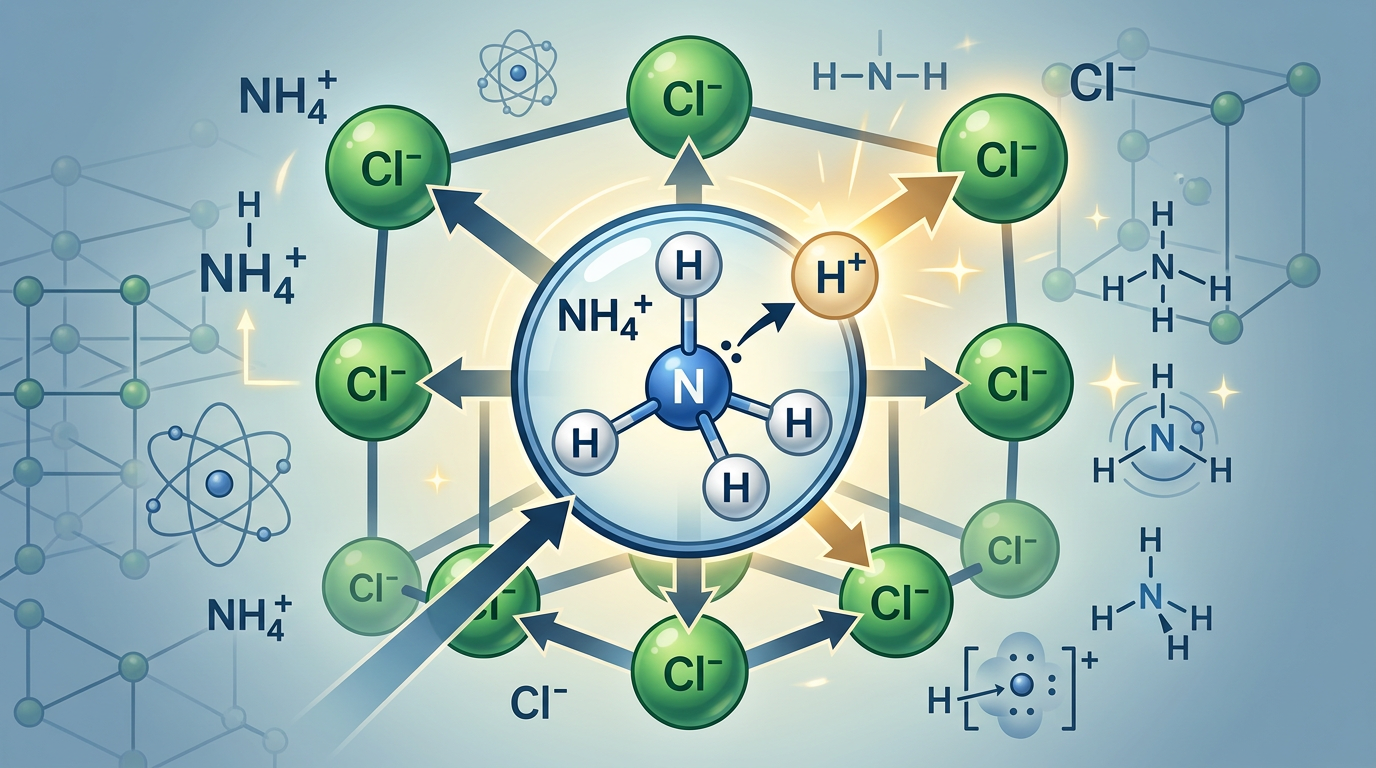
\(\ce{NH4Cl}\) ထဲမှာ ammonium ion \(\ce{NH4+}\) နဲ့ chloride ion \(\ce{Cl-}\) တို့ ရှိပါတယ်။ အဆိုပါ positive ion နဲ့ negative ion တို့ကြားမှာ electrostatic attraction ဖြစ်ပေါ်ပြီး ionic bonding ဖြစ်ပါတယ်။
အလွယ်မှတ်ရရင် — \(\ce{NH4+}\) နှင့် \(\ce{Cl-}\) ကြား = Ionic bond ဖြစ်ပါတယ်။
2. Covalent Bonding
Ammonium ion \(\ce{NH4+}\) အတွင်းမှာ nitrogen (N) နဲ့ hydrogen (H) တို့ကြား electron sharing ဖြစ်တဲ့ covalent bonds တွေ ပါဝင်ပါတယ်။ ဒါကြောင့် \(\ce{NH4Cl}\) ကို ionic compound တစ်ခုလို့သာ မမြင်သင့်ဘဲ ion အတွင်းက bonding ကိုပါ စဉ်းစားရပါမယ်။
3. Dative (Coordinate) Bonding
\(\ce{NH4+}\) ဖြစ်ပေါ်လာတဲ့အခါ ammonia \(\ce{NH3}\) ရဲ့ nitrogen atom ပေါ်က lone pair ကို \(\ce{H+}\) ထံ ပေးဝေပြီး bond တစ်ခု ဖွဲ့နိုင်ပါတယ်။ ဒီလို bond ဖွဲ့ရာမှာ bonding electron pair နှစ်လုံးစလုံးကို atom တစ်ခုတည်းက ပေးတာကြောင့် dative bond သို့မဟုတ် coordinate covalent bond လို့ ခေါ်ပါတယ်။
Conceptually, ဒီ process ကို \(\ce{NH3 + H+ -> NH4+}\) လို့ ဖော်ပြနိုင်ပါတယ်။
4. Metallic Bonding မရှိပါ
Metallic bonding က metal atoms တွေပါဝင်တဲ့ metallic solids တွေရဲ့ ထူးခြားတဲ့ bonding ဖြစ်ပါတယ်။ ဥပမာ sodium, magnesium, aluminium စတဲ့ metals တွေမှာ metallic bonding ကို တွေ့ရပါတယ်။
\(\ce{NH4Cl}\) မှာတော့ metal atom မပါဝင်တဲ့အတွက် metallic bonding မရှိပါ။ ထို့ကြောင့် Question 10207 ရဲ့ အဖြေက D) Metallic ဖြစ်ပါတယ်။
Exam မှာ ဘယ်လိုမှတ်မလဲ?
- \(\ce{NH4+}\) + \(\ce{Cl-}\) ကြား → Ionic bonding
- N–H အတွင်း → Covalent bonding
- \(\ce{NH3}\) lone pair + \(\ce{H+}\) → Dative / Coordinate bonding
- Metal atoms မရှိ → Metallic bonding မရှိ
Final Answer: D) Metallic
ဒီမေးခွန်းမှာ အဓိကက compound တစ်ခုထဲမှာ bonding type တစ်မျိုးတည်းပဲ ရှိရမယ်လို့ မယူဆဘဲ bonding အမျိုးအစားတစ်ခုချင်းစီ ဘယ်နေရာမှာ ဖြစ်ပေါ်သလဲ ဆိုတာ ခွဲခြားစဉ်းစားနိုင်ဖို့ ဖြစ်ပါတယ်။